HealFern may earn a commission if you buy through links on this page, at no extra cost to you. That does not change what we report.
Part of our DentaBiome overview. Last checked November 5, 2026.
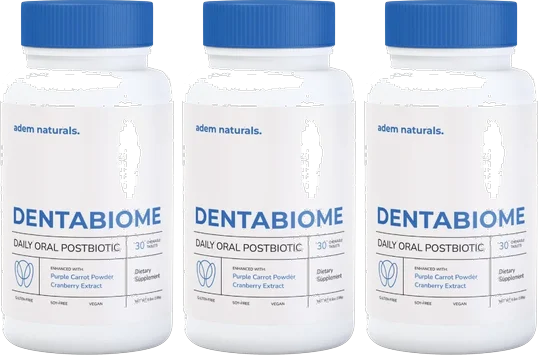
DentaBiome ingredients, as named on the sales page, are seven: inactivated L. plantarum, L. salivarius and L. rhamnosus, a "BioFresh Clean Complex" enzyme blend, xylitol, purple carrot powder and cranberry extract.[1] Zero of the seven comes with an amount. The page calls the formula "a unique proprietary blend", and we found no Supplement Facts panel on the sales page, the policy pages or the vendor's bottle images.
DentaBiome ingredients at a glance
All seven ingredients are named without a dose, so the grades below describe the ingredient in general, not this tablet. The grades come from our ingredient evidence files, which our research method explains.
| Ingredient | What it is | Amount disclosed? | Oral-health evidence |
|---|---|---|---|
| L. plantarum (dual-strain) | Inactivated bacteria (postbiotic) | No | No oral trial in our files |
| L. salivarius | Inactivated bacteria (postbiotic) | No | Limited |
| L. rhamnosus | Inactivated bacteria (postbiotic) | No | No oral trial in our files |
| BioFresh Clean Complex | Enzyme blend, enzymes not named | No | Cannot be graded |
| Xylitol | Sugar alcohol sweetener | No | Moderate (low-certainty trials) |
| Purple carrot powder | Anthocyanin-rich vegetable | No | Weak (none for teeth) |
| Cranberry extract | Fruit extract | No | Limited |
Sales page checked November 5, 2026.[1]
What is in each ingredient, and what does research say?
Only xylitol has repeated human evidence for cavities, and even that is rated low certainty. The bacteria are inactivated postbiotics with no strain IDs or doses, so trials of live strains do not transfer directly to this tablet.[1][6]
L. salivarius (postbiotic)
This species has the most oral data, mostly from one strain, WB21. With xylitol for 8 weeks, WB21 tablets beat xylitol alone on plaque and pocket depth only in smokers.[3] Strain SGL03 for 30 days was no better than placebo on pocket depth.[4] The closest match to DentaBiome is a heat-killed L. salivarius chewable: in 140 children aged 3 to 6, two weeks of it went with a lower 12-month cavity increment in an open-label trial.[2] Live studies used 6.7 x 10^8 to 2 x 10^9 CFU a day; DentaBiome gives no count. Grade: limited.
L. plantarum (postbiotic)
The sales page calls it a "dual-strain complex" but names neither strain.[1] The L. plantarum trials in our files are gut and iron studies, such as strain 299v easing IBS pain over 4 weeks in 214 adults.[5] None measured teeth or gums. Grade for oral use: no oral trial in our files.
L. rhamnosus (postbiotic)
Our L. rhamnosus file holds weight and appetite trials of named strains, not oral-health trials. NCCIH notes that effects are strain-specific, so a result for one strain says nothing about an unnamed one.[6] Grade for oral use: no oral trial in our files.
BioFresh Clean Complex
The vendor describes this as an "enzyme blend" and names no enzyme inside it.[1] Without names or amounts there is nothing to look up, so it cannot be graded and allergy checks are impossible.
Xylitol
Xylitol is a sugar alcohol used as a sweetener. A systematic review found it likely lowers mutans streptococci without changing overall oral bacteria.[7] A Cochrane review found low-quality evidence that fluoride toothpaste with xylitol beats fluoride-only toothpaste for cavities in children's permanent teeth.[8] Trials gave it as gum, lozenges, rinses and toothpaste, usually several grams a day across several doses. Grade: moderate, on low-certainty trials.
Purple carrot powder
Purple carrot is a source of anthocyanins. No human trial for teeth, gums or oral bacteria turned up in a PubMed search on October 20, 2026, and much of the anthocyanin people eat reaches the colon and is broken down there.[10] Grade: weak.
Cranberry extract
A cranberry functional beverage lowered gum and plaque indices in gingivitis patients.[11] Pure cranberry juice cut plaque regrowth and acid production.[14] A tablet of a paraprobiotic plus cranberry extract cut early cavity lesions over 9 months in caries-active preschoolers.[12] Doses varied across these studies. Grade: limited.
How transparent is the DentaBiome formula?
DentaBiome is not transparent: it is a proprietary blend with no total weight and no per-ingredient amount, checked November 5, 2026.[1] With a blend, even a known total would only show the combined weight, not the share of each ingredient.
Here the arithmetic cannot start. One chewable a day holds seven ingredients of unknown size, so the xylitol could be a few milligrams or a gram, and the bacteria could be any count.
A full label would show milligrams for each ingredient, a cell count and strain code for each lactobacillus, and the enzymes inside BioFresh. None of these is published.
Some third-party pages list DentaBiome ingredients or show badges and ratings, and one links to a different domain, getdentabiome.com. Use the vendor's own page and the bottle label as the reference, and set aside lists that do not match them. If the vendor later publishes a Supplement Facts panel, that panel wins over anything on this page.
Ingredient safety and interactions
Xylitol carries the main cautions. It is toxic to dogs, so keep tablets out of their reach, and large amounts can loosen stools.[1] One study linked higher blood xylitol to heart events and found a xylitol drink raised platelet reactivity, so people on blood thinners or with clotting risk should ask a doctor.[9]
Cranberry is listed among foods that may interact with warfarin.[13] NCCIH's infection warnings for probiotics concern live organisms in very ill or immunocompromised people; how they apply to inactivated strains is not settled in our sources.[6] Full detail is on the DentaBiome side effects page.
Do these ingredients prove DentaBiome works?
No. Ingredient studies show what a known dose of a known form did in a defined group. DentaBiome discloses neither dose nor strain, so its ingredient list cannot prove an effect of the tablet.[1]
The vendor's 99.9%, 36% and 60% figures come from lab or unrelated studies, not trials of this product. Our page on whether DentaBiome works sets each claim against the evidence. Food choices also matter for teeth, as our guide to foods good for teeth shows.
Back to the DentaBiome overview.
Frequently asked questions
What are the ingredients in DentaBiome?
The sales page names inactivated L. plantarum, L. salivarius and L. rhamnosus, a BioFresh Clean Complex enzyme blend, xylitol, purple carrot powder and cranberry extract. It calls the formula a proprietary blend and lists no amount for any ingredient, checked November 5, 2026.
How much xylitol is in DentaBiome?
The vendor does not say. No Supplement Facts panel was found on the sales page, policy pages or bottle images. Xylitol studies for cavities used several grams a day, so nobody can tell whether one tablet comes close.
What is BioFresh Clean Complex in DentaBiome?
The sales page calls BioFresh Clean Complex an enzyme blend and does not name the enzymes or their amounts. Without that, its effect cannot be checked against any study, and people with allergies cannot screen it.
Is DentaBiome a probiotic or a postbiotic?
The vendor calls it an oral postbiotic and says its three lactobacilli are not living organisms. No strain codes or counts are given, so research on live probiotic strains does not apply to the tablet directly.
Is DentaBiome vegan and gluten-free?
The bottle says gluten-free, soy-free and vegan. Because the enzymes and flavor sources are not fully listed, people with allergies should ask the seller, Adem Naturals, for a full ingredient list before ordering.
Sources
- DentaBiome sales page. getdentabiome.me (Adem Naturals), read November 5, 2026.
- Open-label trial of heat-killed L. salivarius chewable tablets and caries in 140 children aged 3 to 6. PubMed, read October 28, 2026.
- Shimauchi et al. 2008, trial of L. salivarius WB21 tablets with xylitol on periodontal health. PubMed, read October 28, 2026.
- Placebo-controlled trial of L. salivarius SGL03 in stage I and II periodontitis. PubMed, read October 28, 2026.
- Ducrotte et al. 2012, trial of L. plantarum 299v in irritable bowel syndrome. PubMed, read October 27, 2026.
- Probiotics: What You Need To Know. National Center for Complementary and Integrative Health (NIH), read October 27, 2026.
- Systematic review of xylitol and oral bacteria, including mutans streptococci. PubMed, read October 20, 2026.
- Cochrane review of xylitol-containing products for dental caries. PubMed, read October 20, 2026.
- Cohort and intervention study of plasma xylitol, cardiac events and platelet reactivity. PubMed, read October 20, 2026.
- Study of anthocyanin bioavailability and breakdown by gut microbiota. PubMed, read October 20, 2026.
- Trial of a cranberry functional beverage in gingivitis patients. PubMed, read October 20, 2026.
- Trial of a paraprobiotic plus cranberry extract tablet and initial caries in preschoolers. PubMed, read October 20, 2026.
- Review of food and herb interactions with warfarin and other anticoagulants. PubMed, read October 20, 2026.
- Study of pure cranberry juice exposure, plaque regrowth and acid production. PubMed, read October 20, 2026.
This page is general information, not medical advice. Dietary supplements are not reviewed by the FDA for safety or effectiveness before they are sold and are not intended to diagnose, treat, cure or prevent any disease. Talk to your doctor before taking any supplement, especially if you are pregnant, nursing, take medication or have a health condition.